To Prev. Page
2026 BOK/ERI-BOJ/IMES Joint Research Workshop
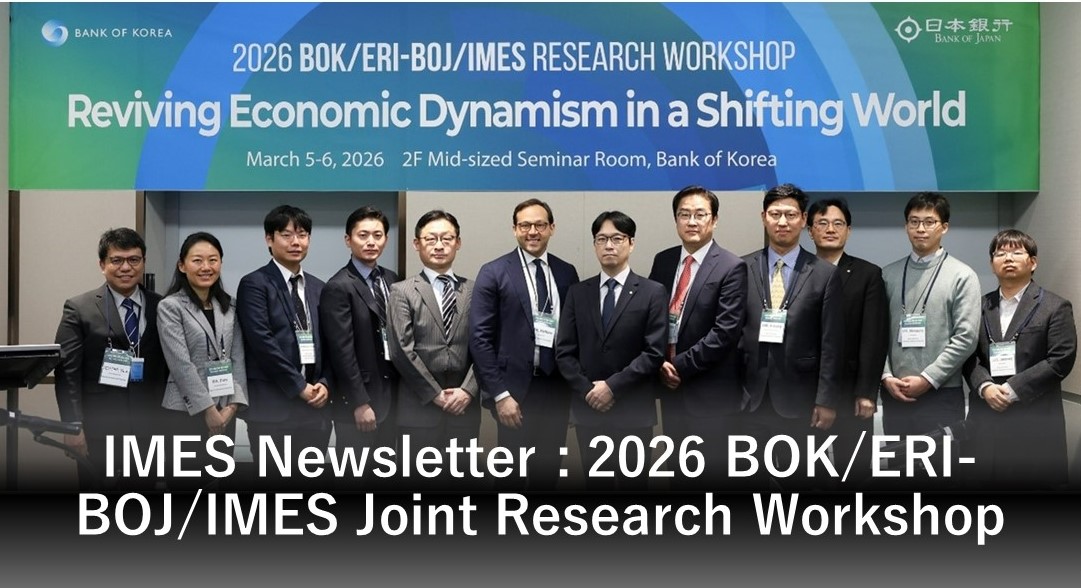
The Bank of Korea Economic Research Institute (BOK-ERI) and the Institute for Monetary and Economic Studies of the Bank of Japan (BOJ-IMES) co-hosted a workshop at the BOK head office in Seoul on March 5 and 6, 2026. This marked the 9th edition of the workshop series since the program began in 2017. This year saw a further expansion of participating institutions; in addition to economists from BOK-ERI, BOJ-IMES, and the Bank for International Settlements Representative Office for Asia and the Pacific in Hong Kong (BIS-HK), the workshop welcomed economists from the Bangko Sentral ng Pilipinas (BSP) and the Reserve Bank of Australia (RBA) for the first time. During the workshop, participants engaged in lively discussions on a wide range of topics, including economic dynamism, monetary policy, and the application of advanced technologies, such as AI, to economic analysis.
The workshop commenced with opening remarks by Jae Won Lee, Deputy Governor and Chief Economist of the Bank of Korea. This was followed by reports on recent economic developments in each economy from Seungho Nah (Director General, BOK-ERI), Shingo Watanabe (Director General, BOJ-IMES), and Matthew Fink (RBA). The sessions featured a total of eight research presentations: three from BOK-ERI, two from BOJ-IMES, and one each from BIS-HK, BSP, and RBA. The workshop concluded with closing remarks by Shingo Watanabe. This newsletter provides summaries of four of the research papers presented during the event.(1)
- 1. Analysis of Corporate Price-Setting Behavior Using Microdata
- 2. Credit Reallocation Toward High-Productivity Sectors and Economic Growth
- 3. Comprehensive Evaluation of Monetary Policy Stance Considering Interest Rates and Balance Sheets
- 4. Analyzing the Effectiveness of Subsidy Policies: A Comparison of Firm Size and Firm Age
- Notes
1. Analysis of Corporate Price-Setting Behavior Using Microdata
The standard New Keynesian models typically assume that the probability of price adjustment remains constant over time. However, rapid shifts in corporate price-setting behavior observed during the recent high-inflation period have prompted a re-evaluation of the validity of this fundamental premise.
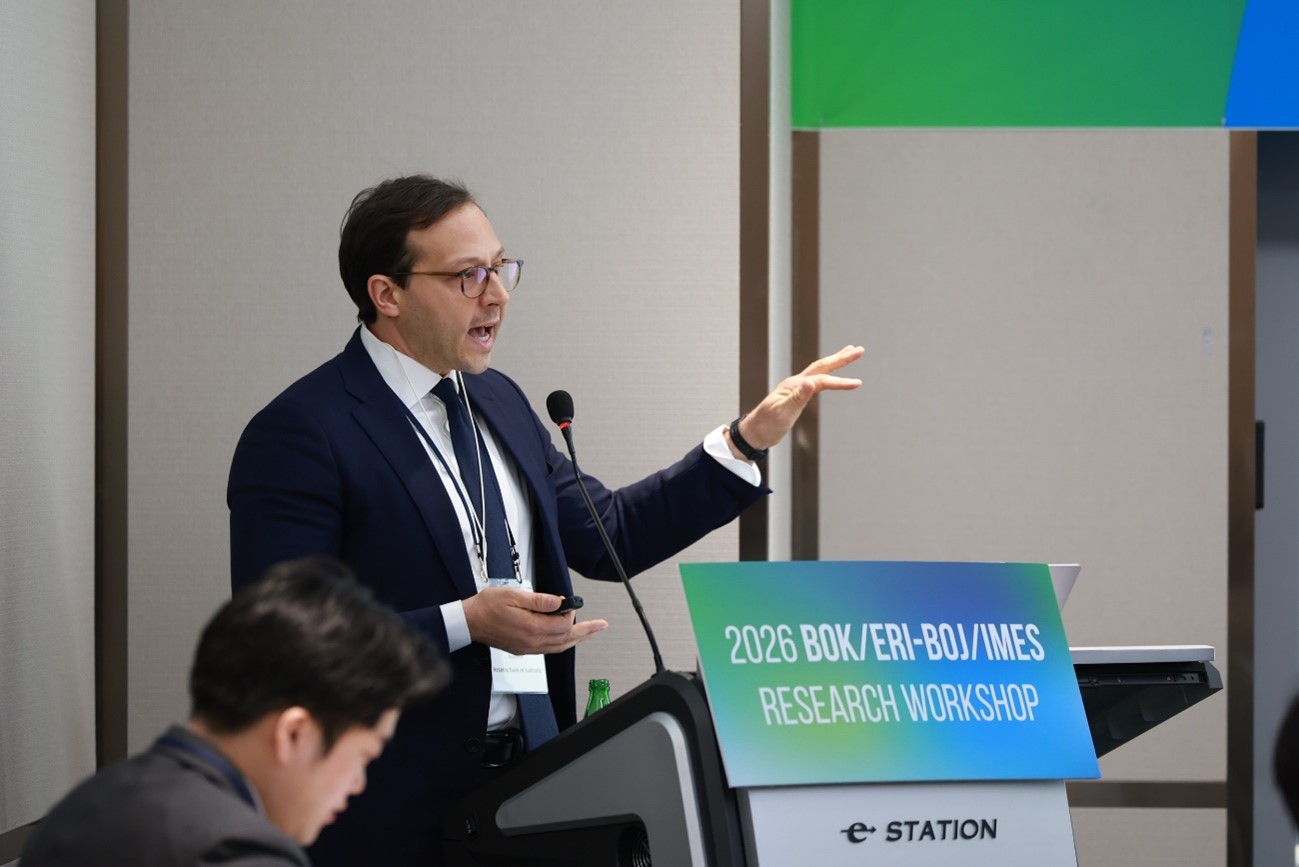
In this context, Matthew Fink (RBA) analyzed corporate price-setting behavior before and after the COVID-19 pandemic, using an extensive Australian dataset that includes over 500 million price observations across 10 million items from 61 retail firms.(2) He reported that during the early stages of the pandemic, heightened uncertainty had led firms to delay price adjustments, resulting in a temporary increase in price rigidity. In contrast, as inflation approached its peak through 2023, the frequency of price adjustments rose, leading to more flexible price-setting behavior than in the pre-pandemic period. He pointed out that corporate pricing strategies had changed significantly.
Furthermore, a counterfactual analysis using the standard dynamic stochastic general equilibrium (DSGE) model employed by the RBA revealed that assuming a constant frequency of price adjustment could lead to an underestimation of inflation in post-pandemic forecasts by approximately 0.4 to 1.3 percentage points. In addition, it was shown that the Philips curve steepened as price-setting became more flexible. Fink argued that in this environment a more aggressive interest rate hike might be optimal, rather than that suggested by standard models.
These results provide empirical evidence that corporate price-setting behavior can change during large inflationary shocks, offering a valuable basis for reconsidering the underlying assumptions of standard macroeconomic models.
2. Credit Reallocation Toward High-Productivity Sectors and Economic Growth
In Korea, soaring house prices have pushed household debt to high levels, with approximately 50% of private-sector credit concentrated in real estate, including housing loans. This credit concentration has gained attention in policy discussions for its potential to dampen economic growth, making the impact of private-sector credit composition on economic performance a critical issue for investigation.
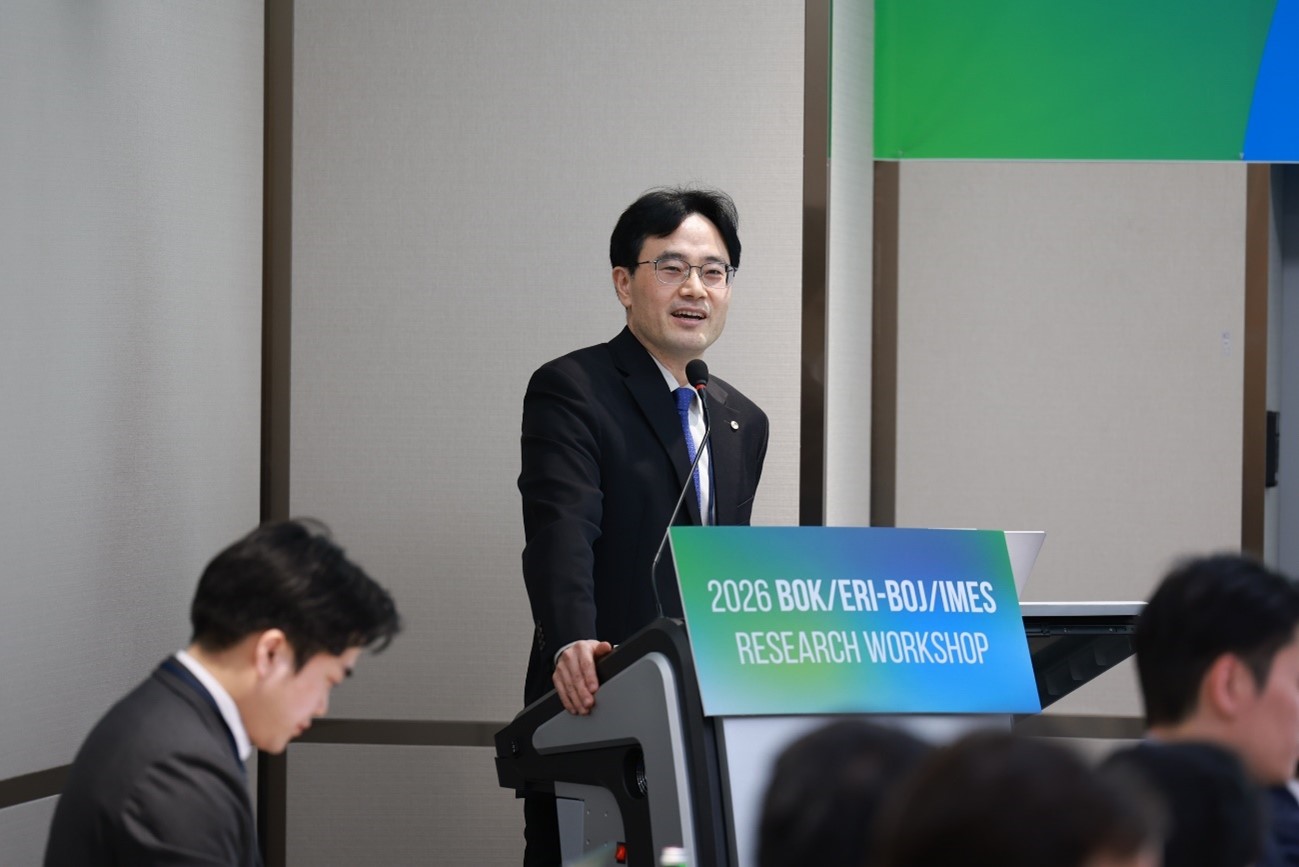
Indo Hwang (BOK-ERI) addressed this issue by conducting an empirical analysis using panel data from 43 countries spanning from 1975 to 2024.(3) He reported that a higher share of corporate debt within total private debt was associated with stronger subsequent economic growth. He added that upon closer examination, the results revealed an "inverted U-shaped" relationship between private debt and economic growth, where excessive debt levels eventually hinder growth. Furthermore, he showed that for any given level of total debt, a higher proportion of corporate debt was consistently associated with greater economic growth.
He then conducted a simulation to assess the impact of shifting credit from households to corporations by applying the cross-country results to the Korean economy. He reported that reducing the household debt-to-GDP ratio by 10 percentage points and reallocating that same amount to corporate debt would increase the economic growth rate by 0.2 percentage points. He explained that this transmission channel involved the expansion of corporate credit, which boosts the investment-to-GDP ratio and leads to enhanced productivity. Notably, the simulation showed that this positive effect was particularly pronounced with credit reallocated to sectors with high external finance dependence, small and medium-sized enterprise (SME)-intensive sectors, and high-productivity sectors, whereas no such effect was observed with credit directed toward the real estate sector.
Hwang proposed specific policy measures to channel credit toward high-productivity sectors, including adjusting risk weights for real estate loans, improving credit evaluation infrastructure for SMEs and startups, and expanding equity financing. These recommendations offer practical implications for shaping Korea's growth strategy.
3. Comprehensive Evaluation of Monetary Policy Stance Considering Interest Rates and Balance Sheets
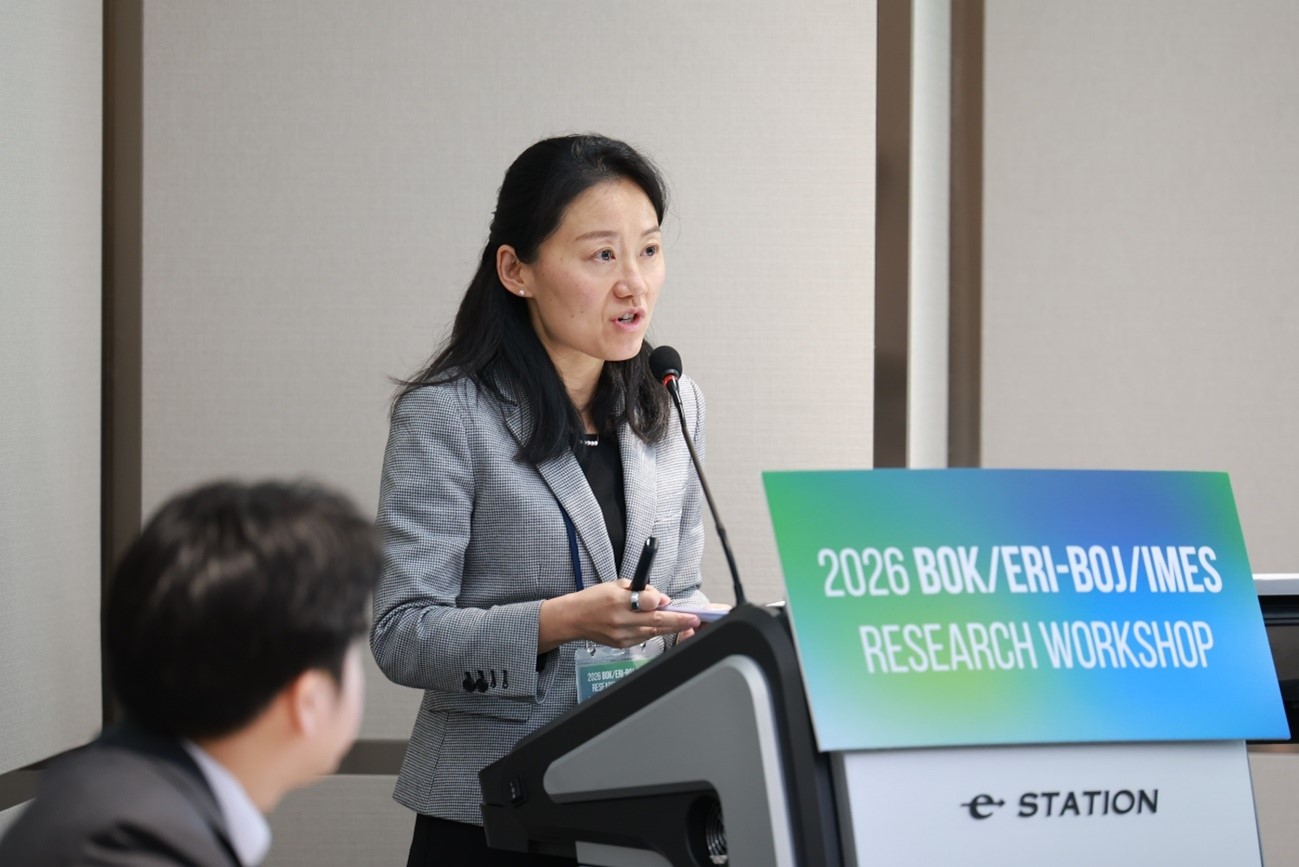
As major central banks have transitioned away from the era of ultra-low interest rates, a key challenge in measuring the monetary policy stance is, in addition to interest rates, how to account for the scale of central bank balance sheets, which expanded under quantitative easing (QE).
To address the challenge, Dora Xia (BIS-HK) proposed the Monetary Policy Conditions Index (MCI) as a new metric that incorporates both interest rate levels and balance sheet size.(4) Specifically, the MCI is defined as a weighted average of the two-year Treasury yield and the ratio of the central bank's balance sheet to the potential GDP. The weights for this index are derived using a Bayesian Vector Autoregression (BVAR) model, incorporating the Financial Conditions Index (FCI),(5) inflation rates, and the output gap. The estimation on the U.S. data yielded a weight of 0.8 for the interest rate variable and 0.2 for the balance sheet variable, suggesting that a one-percentage-point increase in the policy rate is equivalent to a four-percentage-point reduction in the balance-sheet-to-potential-GDP ratio.
Xia reported that, according to the estimated MCI, the substantial expansion of the Federal Reserve's balance sheet since 2015 resulted in a monetary policy stance significantly more accommodative than what short-term interest rates or shadow rates would suggest.(6) She added that while the aggressive easing measures following the pandemic supported economic recovery, they also contributed to the persistent inflation observed since 2022. Regarding the current environment, she argued that despite recent interest rate hikes and quantitative tightening (QT), the MCI remained at an exceptionally low and accommodative level by historical standards due to the still-large absolute scale of the balance sheet.
These findings suggest that the proposed empirical framework enables a more comprehensive evaluation of the monetary policy stance, which can be applied widely to the policy analysis of central banks around the world.
4. Analyzing the Effectiveness of Subsidy Policies: A Comparison of Firm Size and Firm Age

What types of firms should receive subsidies to improve the efficiency of resource allocation across the entire economy? While many countries implement size-dependent subsidy policies targeting SMEs, the fact that a firm is "small" does not necessarily mean it faces financial constraints. Firms may remain small not only because their growth is hindered by financial constraints but also simply because their productivity is low.
Jaeyoung Seo (BOK-ERI) addressed this issue by analyzing data on Korean firms, showing that while there is no clear correlation between firm size and capital productivity, there is a distinct negative correlation between firm age and capital productivity, with younger firms exhibiting significantly higher levels of capital productivity.(7) Based on the results, he argued that younger firms were more likely to be constrained by insufficient self-finance and thus more strongly influenced by financial frictions.
Seo then conducted simulations using a heterogeneous firm model and reported the following results. In an economy with relatively weak financial frictions, such as the current Korean economy, size-dependent subsidies may contrarily worsen allocative efficiency. In contrast, while size-dependent subsidies can improve efficiency in economies with strong financial frictions, age-dependent subsidy policies—which target younger firms—outperform size-dependent ones in either case. He emphasized that firm age served as a superior indicator for identifying companies truly facing financial constraints. He argued that reallocating resources to these younger firms improved the efficiency of resource allocation, which in turn boosts GDP.
These results underscore the importance of indicators that capture the intensity of financial frictions and the actual status of firms in designing subsidy policies, providing a valuable empirical basis for reconsidering existing SME support policies in Korea that rely on simple size-based criteria.
Notes
Click on the number at the end of each item to return to the main text.
- In addition to the featured summaries, several other studies were presented. Vic Delloro (BSP) delivered a report titled "From Quota to Prices: Effects of the Rice Market Liberalization in the Philippines," while Minyoung Lee (BOK-ERI) presented his research on "Global Supply Chain Risk Analysis: Application of Network Methods to LLM-Identified Structures." From the BOJ, Yojiro Ito presented "Supply Shocks and Inflationary Pressures in Global Value Chains: The Role of Network Centrality," and Yusuke Takahashi presented "Generative AI for Economic Simulation: Heterogeneity of Subjective Models of Inflation." (1)
- Fink, M. and J. Hambur. 2026. "Shifts in Australian Price-Setting Behaviour Around Large Shocks," CAMA Working Paper 07/2026, Centre for Applied Macroeconomic Analysis, Australian National University. (available at https://ideas.repec.org/p/een/camaaa/2026-07.html) (2)
- Hwang, I.D., H. Jang, and W. Kim. 2026. "Reallocating credit toward the productive sector and revitalizing growth," mimeo. (3)
- Mojon, B., P. Rungcharoenkitkul, and D. Xia. 2026. " Integrating balance sheet policy into monetary policy condition," BIS Working Papers No 1281. (available at https://www.bis.org/publ/work1281.htm) (4)
- The Financial Conditions Index (FCI) is a comprehensive metric that integrates multiple financial variables—such as interest rates, stock prices, credit spreads, and exchange rates—to provide a holistic measure of the overall environment within financial markets. In her analysis, Xia uses the FCI published by the Federal Reserve Bank of Chicago. (5)
- A shadow rate is a conceptual short-term interest rate, which is not subject to the Zero Lower Bound (ZLB) constraint, that aims at capturing the effects of unconventional monetary policies under the ZLB environment. For a detailed technical discussion, please refer to the following paper: Wu, J. and D. Xia, (2016), "Measuring the Macroeconomic Impact of Monetary Policy at the Zero Lower Bound," Journal of Money, Credit and Banking, vol. 48(2-3), pp. 253-291. (6)
- Seo, J. 2026. "Macroeconomic implications of size and age-dependent policies under Financial Friction," mimeo. (7)
See Also
Recent Relevant Newsletters