To Prev Page
IMES Newsletter: 2025 BoC-Philadelphia Fed-BOJ Joint Workshop

The Bank of Canada (BoC), the Bank of Japan (BOJ), and the Federal Reserve Bank of Philadelphia co-hosted a workshop at the head office of the BOJ on November 14, 2025.
The workshop was initiated by the BoC and the BOJ in 2013, with the Federal Reserve Bank of Philadelphia joining in 2019, to promote research discussions and share latest policy-relevant research among participating central banks and academic researchers. This year, in the eighth edition of the workshop, two speakers were invited from academia: Professor Markus Brunnermeier (Princeton University) and Professor Ippei Fujiwara (Keio University / University of Tokyo).
From among the papers presented at the workshop, this newsletter summarizes four papers that tackle fundamental issues in monetary policy and macroeconomic variables such as unemployment rates and real exchange rates.
1. Mortgage Interest Rate Risk and the Propagation of Shocks
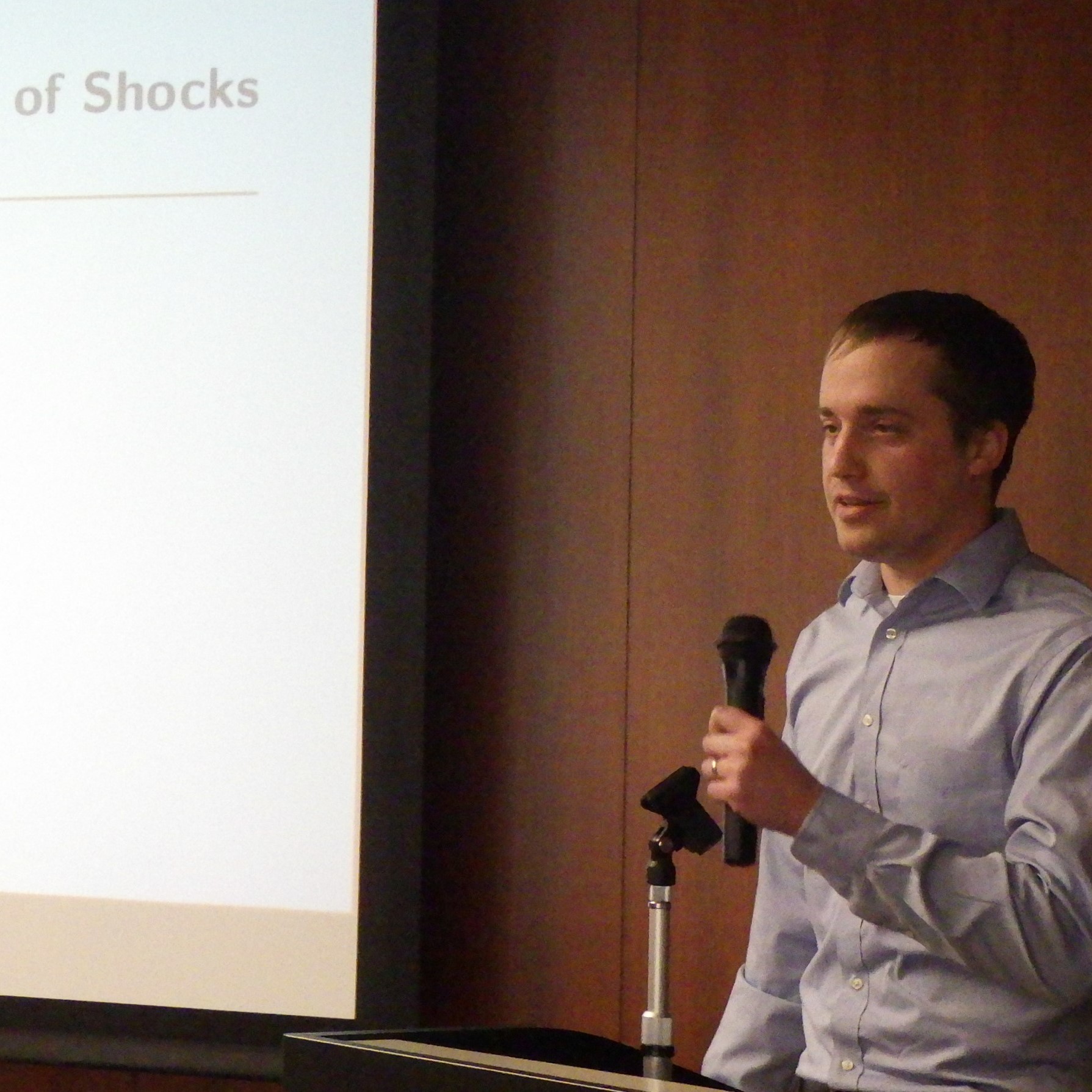
Mortgage market structures differ across countries. Adjustable-rate mortgages dominate in Canada, the UK, and Japan, while fixed-rate mortgages are more prevalent in the US, Denmark, and France. Understanding the macroeconomic implications of these structural differences remains a key challenge.
Dr. Irwin (BoC) addressed the challenge by focusing on the role of fixed-rate mortgages as a potential automatic stabilizer of the economy. To explore the role, he built a Heterogeneous-agent New Keynesian (HANK) model with housing and mortgages. Using the model, he compared macroeconomic responses to various shocks in two economies with fixed- and adjustable-rate mortgages, respectively, and reported three key findings. First, the economy with fixed-rate mortgages responds less to monetary policy shocks than that with adjustable-rate mortgages. Second, the degree to which fixed-rate mortgages act as a stabilizer depends on how profits or losses arising from changes in net-interest margins for financial intermediaries are distributed to shareholder households. Third, fixed-rate mortgages contribute to stabilizing the economy during a supply-driven recession, but not during a demand-driven recession.
This study suggests that the transmission of shocks including monetary policy shocks may differ across economies, depending on mortgage market structures. Importantly, the insight that the transmission hinges on how profits or losses are distributed among households and financial intermediaries suggests the importance of market structures and institutional designs that give rise to the distributional effects of macroeconomic shocks.
2. Monetary Policy with a Safe Asset
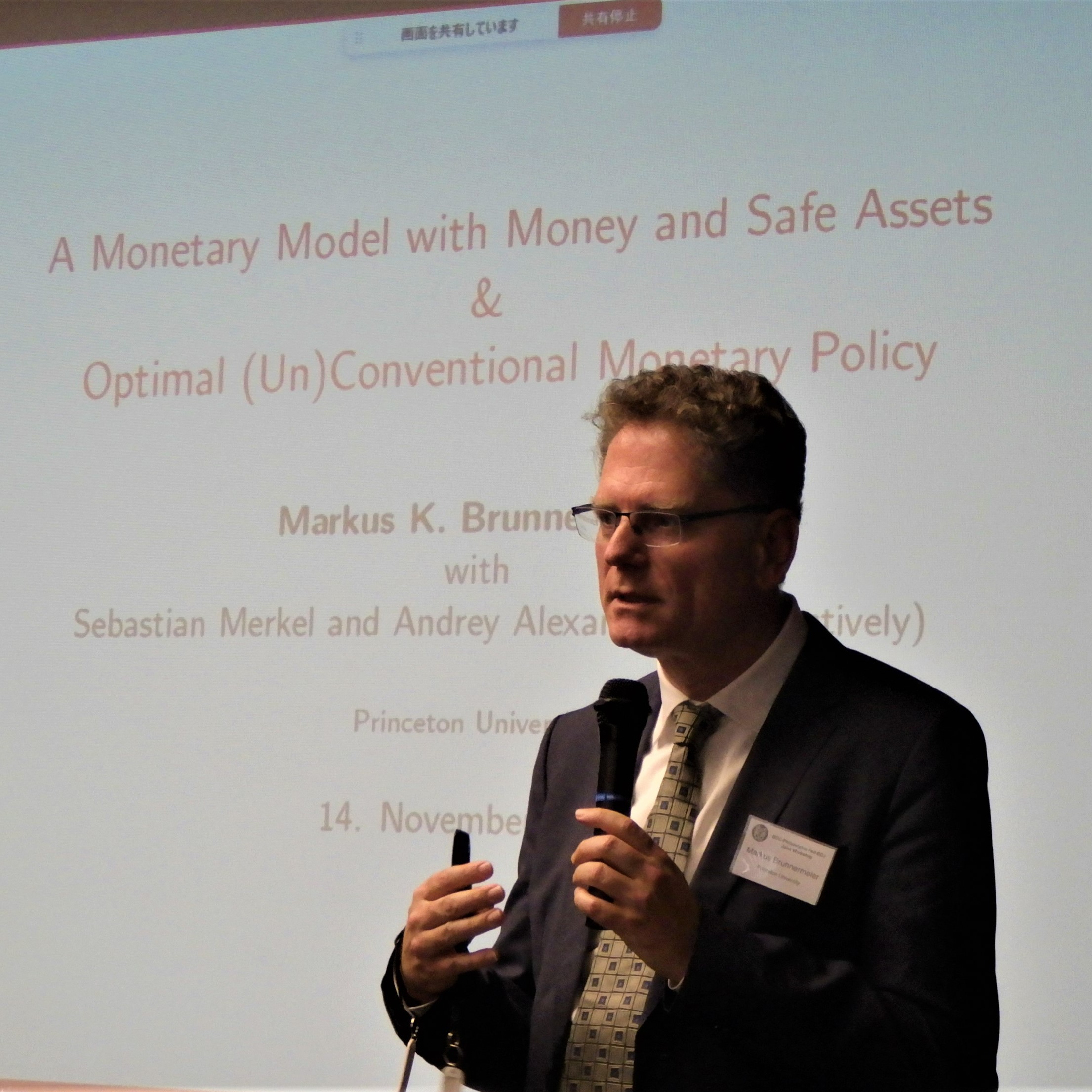
Standard modern macro models typically assume for simplicity that government bonds are in zero net supply. In practice, however, large amounts of government bonds are issued and held by investors. In addition, government bonds serve as a safe asset. Considering a positive supply of government bonds may have different implications for monetary policy relative to standard models.
To address the issue, Professor Brunnermeier (Princeton University) developed a dynamic model with banks that features three elements: the fiscal theory of the price level, government bonds as safe assets, and money as a medium of exchange. Using the model, he analyzed optimal monetary policies for the interest rate and a central bank's balance sheet, and reported three main findings. First, a change in the interest rate exposes banks to interest rate risk through its effects on the valuation of government bonds, so that a central bank needs to consider financial stability as well as the stabilization of the real economy and inflation when setting interest rates. Second, the effects of quantitative easing (QE) or tightening (QT) differ depending on the maturity of purchased government bonds. Third, to enhance the effectiveness of subsequent adjustments in the interest rate, it is optimal to conduct "preparatory QE/QT"—a strategy to induce investors, including banks, to hold optimal interest rate risk ex-ante.
This research underscores the non-neutrality of the maturity composition of government bonds and the importance of the consideration of interest rate risk for monetary policy. By incorporating long-term government bonds and banking sectors into a modern macro model, the analysis offers implications for monetary policy, particularly regarding a central bank's balance sheet policy.
3. Why Didn't the U.S. Unemployment Rate Rise at the End of WWII?
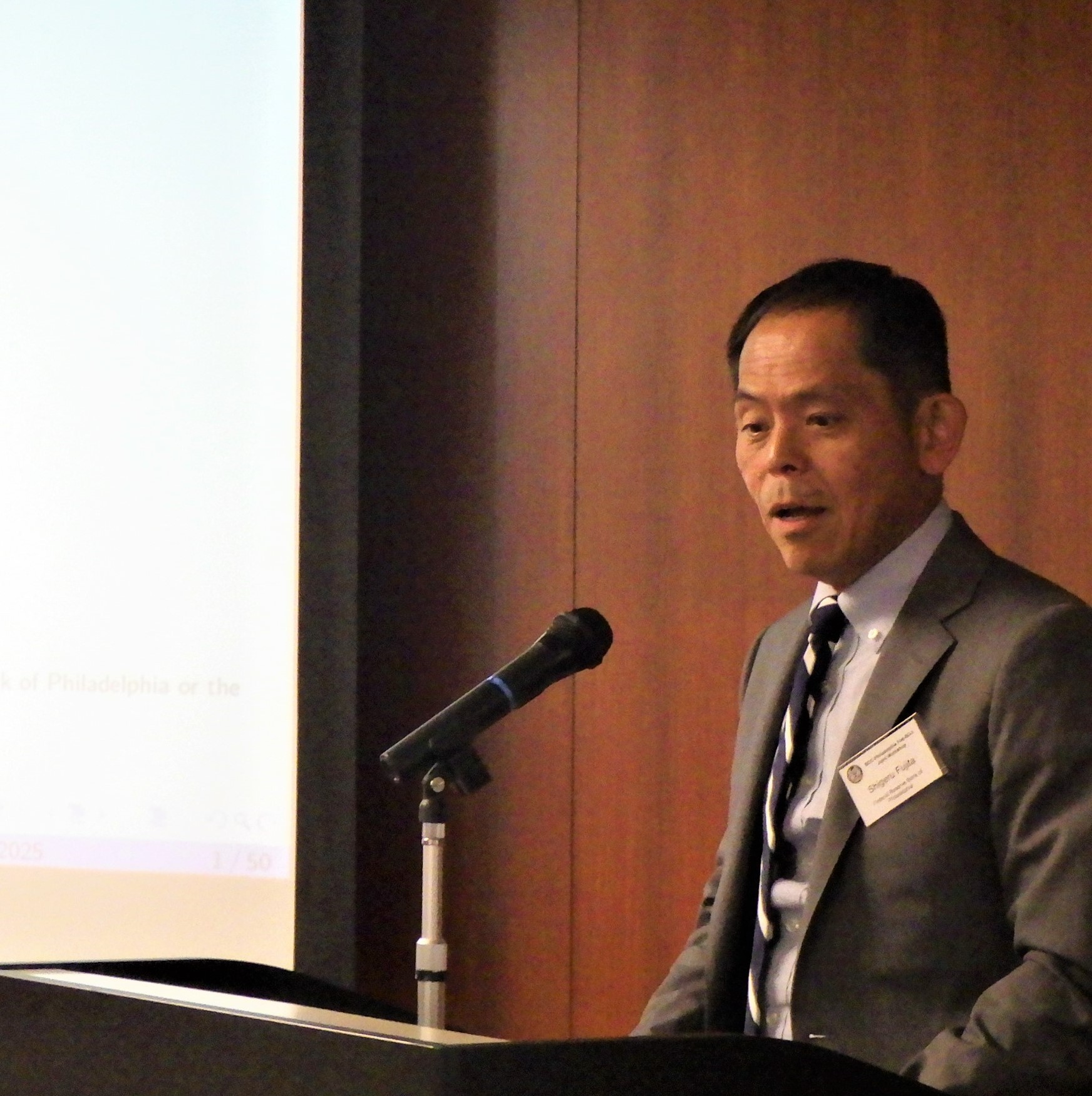
The unemployment rate is a key indicator for assessing maximum employment, and it is critical to understand the dynamics of the unemployment rate in relation to other macroeconomic variables and policies. At the end of World War II, the US unemployment rate rose only moderately, while government spending and GDP plunged significantly. In particular, the unemployment rate peaked at just over 4% despite 70% and 24% declines in government spending and GDP, respectively—an outcome that defies Okun's Law.
To address the question of how to explain the disconnect, Dr. Fujita (Federal Reserve Bank of Philadelphia) studied a newly-digitized longitudinal data set (the Palmer data). Specifically, he used both background demographics and complete labor market history for surveyed individuals, supplemented by 1940s government surveys. He presented three main findings. First, withdrawals from the labor force at the end of the war, driven in part by delays in veterans' labor force entry due to vacations and schooling, contributed to the small rise in the unemployment rate. Second, among those staying in the labor force, most of the workers who lost their jobs moved directly into a new job, and workers accomplished these job-to-job transitions despite moving across industries. Third, a neoclassical model suggests that wartime crowding-out of consumer durables, residential capital and business capital generated pent-up demand that cushioned the fall in GDP against the massive fiscal shock.
This study underscores the importance of collecting micro data and digitizing historical records for rigorous quantitative analysis. Learning from past dramatic events—as exemplified by massive labor market adjustments—helps deepen our understanding of the current and future economy.
4. Productivity and Wedges: Economic Convergence and the Real Exchange Rate
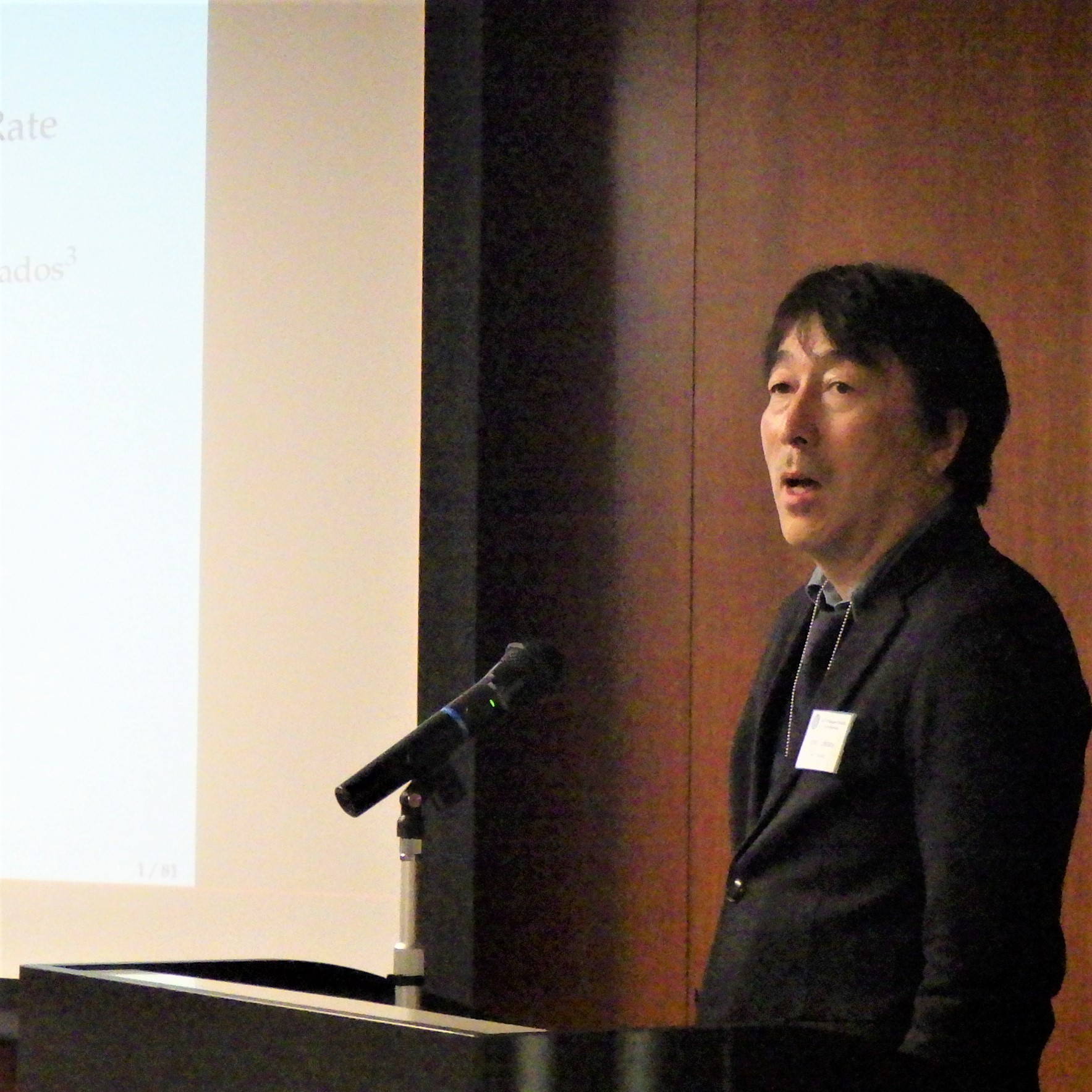
The "Penn Effect"—whereby wealthier countries have higher price levels—is observed in many countries. Then, significant appreciation in the real exchange rate, which reflects relative price levels, is typically observed when countries grow rapidly. However, while Eastern European countries have exhibited clear GDP convergence to the Western European countries since joining the EU, appreciation in real exchange rates has stalled since 2008.
To explain the puzzle, Professor Fujiwara (Keio University / University of Tokyo) constructed a multi-country, two-sector general equilibrium model and analyzed annual panel data from 1999-2020 for 12 Eastern European countries. He presented the main findings as follows. First, the theoretical relationship between GDP growth and the real exchange rate is nuanced, giving rise to a modified Balassa-Samuelson effect. Specifically, an increase in productivity in the traded goods sector generates real exchange rate appreciation, while a uniform increase in productivity across sectors leads to a real exchange rate depreciation. Second, empirical analysis shows that productivity growth and labor market distortions drive long-term real exchange rate movements, supporting the modified Balassa-Samuelson effect. Moreover, the model simulation that accounts for productivity, labor market distortions, and capital inflows closely matches historical real exchange rate paths.
This research provides new insights into the determinants of real exchange rates in the long run, underscoring the importance of sectoral differences in productivity growth and labor market distortions. It shows that GDP convergence can take place without appreciation in real exchange rates.
* The titles and information in this newsletter are as of the time of the workshop.
Notes
The newsletter of the past "Bank of Canada, Federal Reserve Bank of Philadelphia, and Bank of Japan Joint Workshop"